The short answer
Facebook and Instagram ads book roofing estimates when you run one simple campaign optimized for leads, use real photos and video of your crews, send clicks to a focused form or landing page, give the campaign enough budget and time to learn, and call every lead within minutes. Most wasted spend comes from splitting the budget too thin, restarting campaigns too often and slow follow-up.
In this guide
Facebook and Instagram can be one of the best sources of exclusive roofing estimates, or a very efficient way to set money on fire. The difference usually isn't the platform. It's campaign structure, creative, patience and what happens after the lead comes in.
This guide covers what books estimates and what burns budget.
Why Facebook works for roofing
Google catches homeowners who are already searching for a roofer. Facebook and Instagram reach homeowners before they search: the person who has been meaning to deal with an old roof, or who noticed granules in the gutter last week.
That gives you three advantages:
- Less competition for attention. You're not in a list of ten roofers on a results page.
- Room to show proof. Video of your crews, real job photos and your reviews do a lot of selling.
- Local targeting. You can run ads only in the ZIP codes you serve.
The tradeoff is intent. A Facebook lead is often earlier in their decision than a Google searcher, so fast calling and qualifying matter even more.
Keep the structure simple
The most common mistake we see is too much structure for the budget. Several campaigns, several ad sets with slightly different audiences, each getting a trickle of money. None of them gets enough results to learn.
What tends to work at small and medium budgets:
- One campaign optimized for leads.
- One broad ad set covering your service area, ages roughly 25 to 65, homeowner-heavy ZIP codes, without stacked interest targeting.
- Four to six ads with different angles, so the algorithm can find the winners.
The reason is data. The algorithm learns from results, and each ad set learns on its own. One ad set with the whole budget gathers results quickly. Three ad sets splitting the same budget and aiming at the same people end up competing with each other in the same auction, and each one learns slowly. When a campaign is working, resist the urge to rebuild it. Turn off the weakest ads, add new ones next to the winners, and leave the structure alone.
Budget and the learning phase
Every new ad set starts in a learning phase while Meta figures out who responds. Meta's guidance is that an ad set needs roughly 50 optimization events within 7 days to exit the learning phase, and results are usually less stable until then.
What that means in practice:
- Don't judge a campaign in its first few days. Early cost per lead is noisy.
- Don't keep editing. Big changes to budget, targeting or creative can restart learning.
- Budget for learning. Expect the first few weeks of spend to buy data as much as leads, and decide ahead of time when you'll make the first real call.
Creative that books estimates
Homeowners scroll past anything that looks like an ad for a random company. What stops them is what looks real and local:
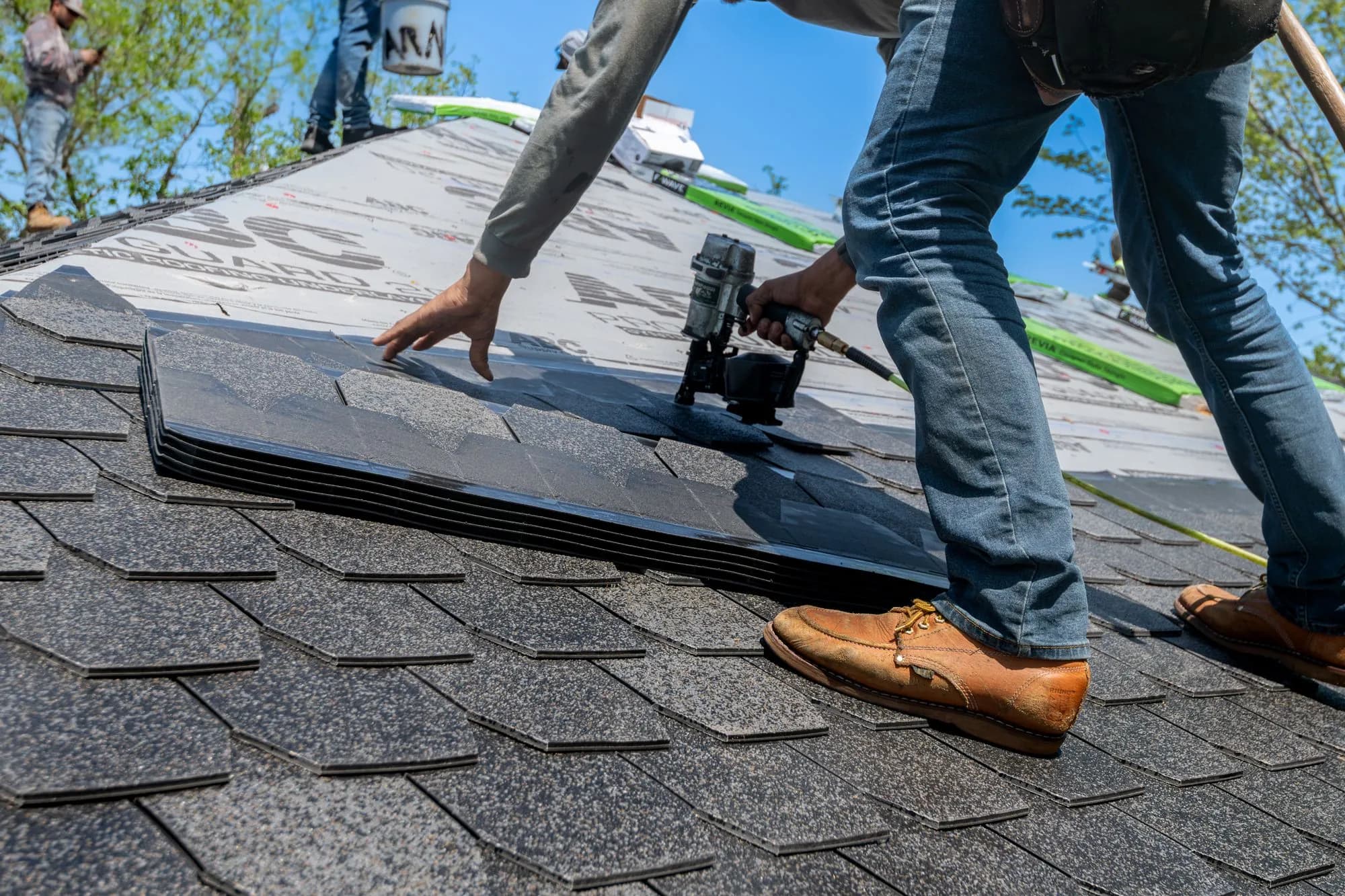
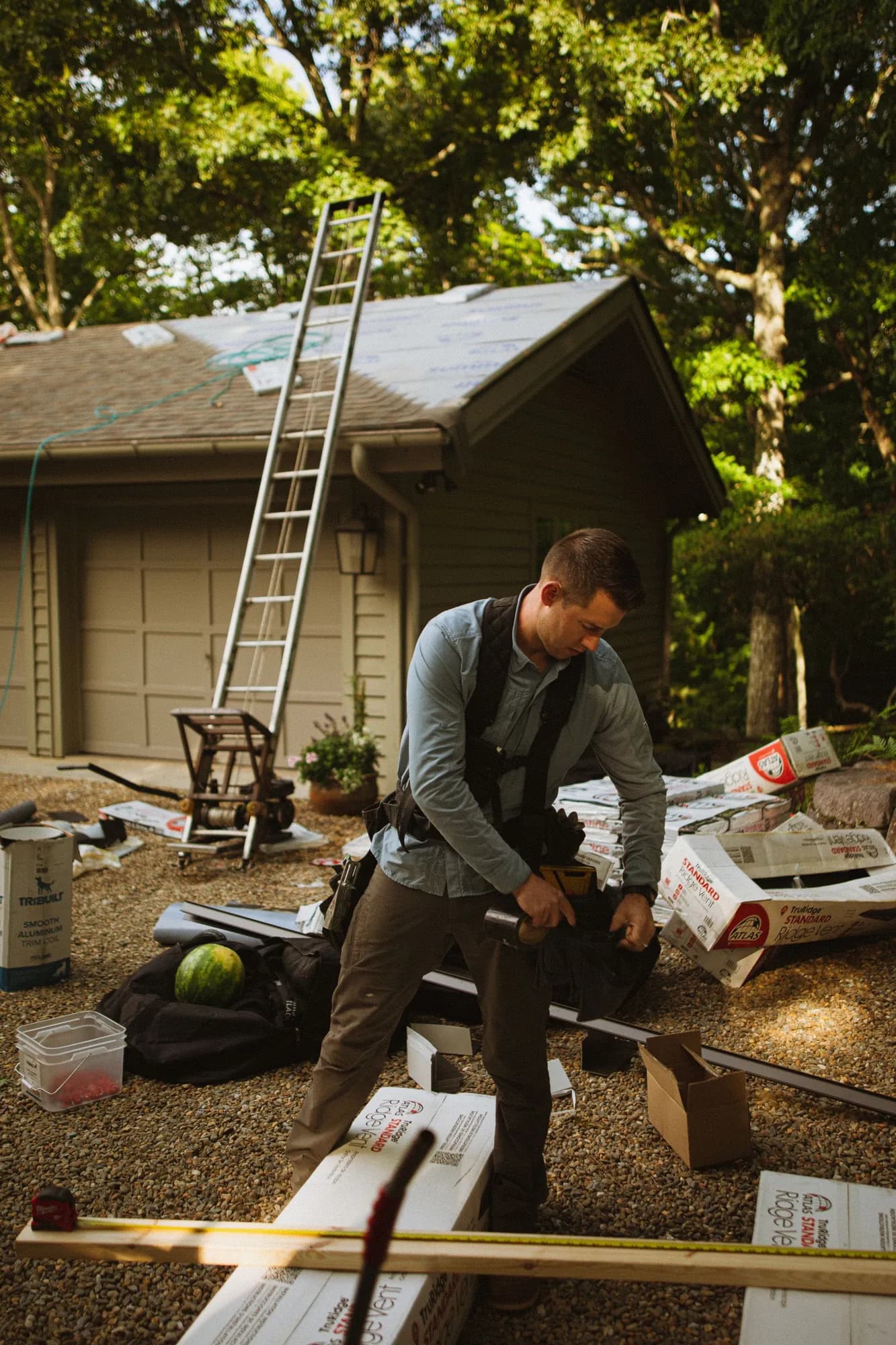
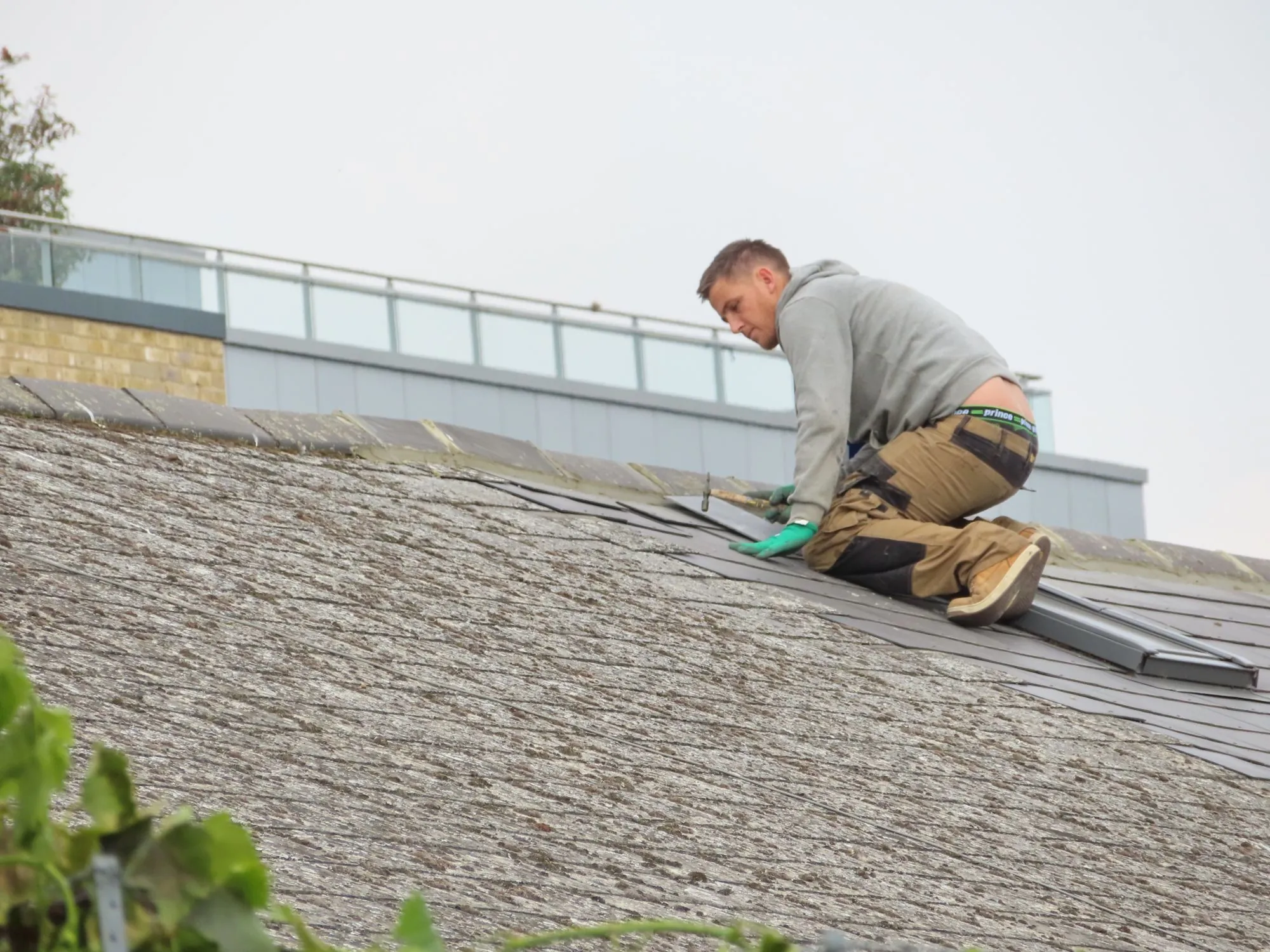
- Your crews on real jobs. Tear-offs, drone shots of finished roofs, the owner talking to camera from a job site.
- Before and after. Clear, simple, and yours.
- A specific reason to act. A free inspection, a clear next step, or the season (before storm season, before winter).
- Proof. Star ratings, review counts and short quotes from real customers.
Stock photos and generic graphics tend to underperform, and homeowners who respond to real footage recognize your company when you call.
Targeting: where roofing ads go wrong
Roofers tend to over-target. It feels safer to pick homeowners interested in home improvement, ages 35 to 60, within 5 miles of the office, but every restriction shrinks the pool the algorithm can learn from and usually raises your costs.
What tends to work better:
- Draw the map around your real service area. Use ZIP codes or a radius that matches where you want jobs. On small budgets, a slightly wider area often beats a tight one that can't spend its budget.
- Keep audiences broad. Let the creative do the targeting. An ad showing a roof replacement on a home like theirs speaks to the right people on its own.
- Skip stacked exclusions. Excluding past engagers or video viewers can quietly cut out the people most likely to respond.
- Filter renters in the form, not the targeting. Asking "do you own the home?" screens out renters without starving the campaign.
Lead forms vs landing pages
Facebook gives you two main ways to capture a lead:
Instant lead forms open inside Facebook with the person's details prefilled. They usually produce the most leads at the lowest cost, but some people submit without meaning much by it.
Landing pages take the person to your own page. Fewer people finish, but the ones who do are usually more committed, and you can let them pick an estimate time on the spot.
A good middle ground for roofing:
- If you use lead forms, add one or two qualifying questions (do you own the home, what's going on with the roof) so casual clickers drop off.
- If you use a landing page, keep it to one job: a short form or a booking calendar, your reviews and real photos, and nothing that leads away from the page.
Either way, the lead is only as good as the first call. See how fast to call a roofing lead.
Mistakes that burn budget
- Splitting the budget across too many ad sets. Each one starves.
- Restarting instead of iterating. New campaigns throw away everything the old one learned.
- Deleting ads that were working. Turn off losers; leave winners alone.
- Broken links. An ad that points to a page that moved or no longer exists keeps spending money on clicks that go nowhere, and the ad platform won't warn you. Click your own ads after launch and after any website change.
- Slow follow-up. A lead called the next day is worth a fraction of one called in 5 minutes.
- Claims you can't back up. Keep promises specific and true, and be careful with insurance claim language. In many states, negotiating a claim for a homeowner requires a public adjuster license.
A simple launch checklist
Before you turn a roofing campaign on:
- Pixel and Conversions API set up, with a test lead showing up as a Lead event.
- Every ad's link clicked and tested on a phone.
- UTM parameters on every ad.
- Lead alerts going to whoever calls, with a 5-minute response plan.
- A confirmation text and reminders ready for booked estimates.
- A date on the calendar, a few weeks out, for the first real performance review.
What to track
Cost per lead is a start, not the goal. Track the full chain for every campaign:
- Leads and cost per lead
- Contact rate (how many you actually reached)
- Booked estimates and cost per booked estimate
- Show rate
- Signed jobs and cost per job
Tag every ad with UTM parameters so each lead in your CRM shows the exact ad it came from. After a few weeks, the ad with the cheapest leads often isn't the one producing the most signed jobs.
For the full system from lead to estimate, start with how roofing companies get booked estimates.
Questions roofers ask
How much should a roofer spend on Facebook ads?
Enough for the campaign to get through its learning phase and produce leads you can judge. Meta's guidance is roughly 50 optimization events in a week for an ad set to finish learning, so very small budgets spread across several ad sets rarely get there. Put your budget into one campaign and one ad set to start.
Are Facebook lead forms or landing pages better for roofing?
Lead forms usually produce more leads at a lower cost, but with lower intent. Landing pages produce fewer leads that are more likely to answer and book. Adding a couple of qualifying questions to a lead form, and calling every lead fast, closes much of the gap.
Do Facebook ads work for roofing companies?
They can, because they reach homeowners before they start searching and let you show real crews, real jobs and your reviews. They work best when paired with fast calling and qualifying, since Facebook leads are earlier in their decision than someone searching Google for a roofer.
Can roofing ads mention insurance claims?
Be careful. Saying you'll help homeowners understand their options is different from saying you'll negotiate their claim. In many states, negotiating a claim on a homeowner's behalf requires a public adjuster license, so check your state's rules before running claim-focused ads.
Written by
Tristin Duncan
Founder, Roof Calendar · Updated September 24, 2026
Tristin Duncan is the founder of Roof Calendar and Momentum Marketing, a Fort Worth marketing company that builds Meta ad campaigns, landing pages and lead follow-up systems for home service businesses. Roof Calendar books pre-qualified roofing estimates directly onto roofers' calendars.
About this site